Stop the Stress: How NZ Business Owners Can Ditch Provisional Tax for Good
Dec 04, 2025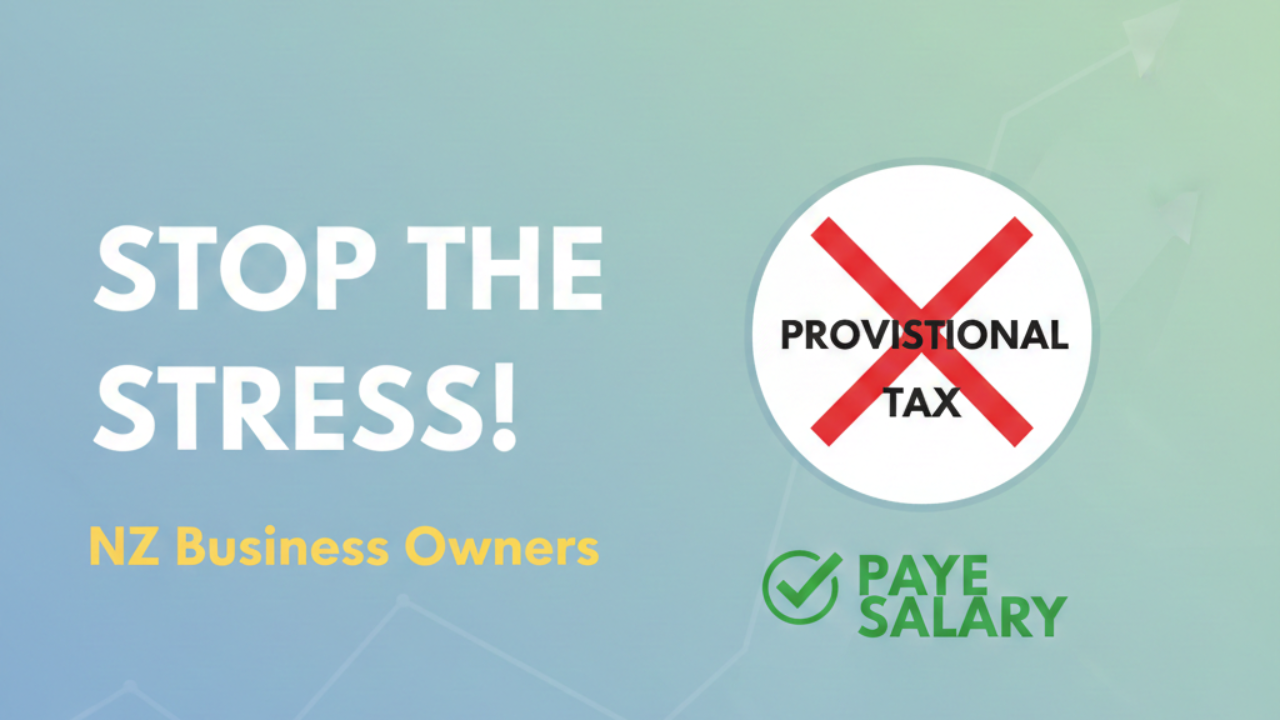
Tired of the cash flow roller coaster caused by provisional tax and surprise end-of-year tax bills? For many small business owners and company directors in New Zealand, the simple switch from "drawings" to a formal PAYE salary is the game-changer you've been looking for.
This method transforms your tax management from an annual headache into an easy, pay-as-you-go system.
The Provisional Tax Problem Solved
Provisional tax requires you to estimate and pre-pay your income tax throughout the year. If your income fluctuates, this can lead to overpaying, underpaying, or nasty interest charges.
The Solution? Put Yourself on a PAYE Salary!
When you take a formal salary, the exact amount of income tax (PAYE - Pay As You Earn) is calculated and deducted every pay cycle. Your company handles the tax payment to the IRD, just like for any other employee.
This means:
- No more large lump-sum tax payments.
- No more provisional tax liability.
- No more major tax surprises at year-end.
Three Simple Steps to Switch to a PAYE Salary
Making the change is easier than you think, especially with modern payroll software.
Step 1: Choose Your Payroll Software
Sign up with a reliable online payroll provider. Popular New Zealand options, like iPayroll or Xero Payroll, integrate seamlessly and make the process incredibly simple.
Step 2: Calculate Your Gross Earnings
Work out the net amount you currently take as drawings (e.g., per week) and add the approximate tax you should be setting aside for it (e.g., an extra ). This total ($3,000) is your Gross Earnings.
Enter this Gross Earnings figure into your payroll software. The software will instantly calculate the precise PAYE amount required for the IRD.
|
Example (Weekly) |
Amount |
|
Gross Earnings |
|
|
Less: PAYE (Tax) |
(Approx.) |
|
Your Net Pay |
Export to Sheets
Step 3: Pay and Put Aside the PAYE
- Pay yourself the Net Pay (the funds you actually receive).
- Immediately transfer the calculated PAYE amount into a separate, dedicated bank account.
- File and Pay: Your company is responsible for paying this PAYE amount to the IRD by the 20th of the following month. Since you set it aside weekly, the money is ready to go!
💰 Essential Tip: Pay Yourself the Full Profit
To completely avoid year-end shocks, ensure your gross salary is structured to cover the company's full net profit.
If your company's weekly profit (after all expenses except your salary) is , make sure your Gross Earnings in the payroll is also . If you are leaving profit in the company, ensure you have set that amount aside to cover the company's annual corporate tax liability (28%).
By consistently using a formal PAYE salary, you gain control, predictability, and best of all—you can finally say goodbye to the stress of provisional tax!